 Reviews



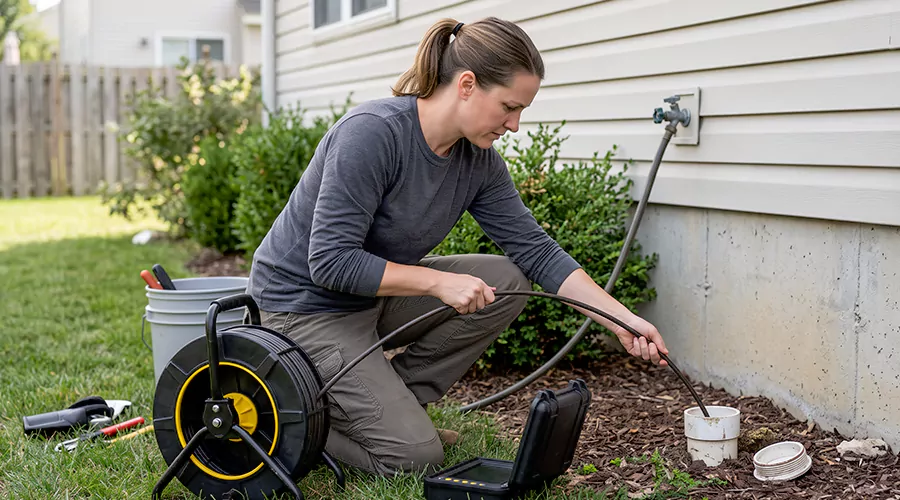
A sewer line keeps backing up when an obstruction repeatedly forms or a damaged pipe prevents wastewater from flowing normally. Tree root intrusion, grease accumulation, and sagging sewer pipes are common causes. Professional hydro jetting typically costs $350 to $600 in the United States based on 2026 pricing, but sewer line cleaning alone won't repair structural damage.
A sewer backup that returns within weeks or months indicates that the underlying problem may still be present. Clearing a blockage restores water movement, but it doesn't necessarily explain why the obstruction developed. Identifying the recurring cause is the best way to avoid repeated service visits and wastewater damage.
What Causes a Sewer Line to Back Up Repeatedly?
Recurring sewer backups usually indicate a physical restriction that remains after cleaning or gradually returns. The problem can develop within a private sewer lateral or farther along the public wastewater system. Different causes require different repairs, even when the symptoms appear identical.
Tree Roots Entering Sewer Pipes
Tree roots naturally grow toward moisture in the soil. If an underground sewer pipe has cracks or separated joints, roots can enter and spread inside.
A drain-cleaning cable may cut through the roots and temporarily restore wastewater flow. However, roots can regrow through the same opening when the damaged connection remains unrepaired.
Sagging Sewer Pipe
A section of sewer pipe may settle into a low spot because of soil movement or improper support. Plumbers commonly call this condition a pipe belly.
Wastewater collects in the sagging section instead of flowing smoothly toward the sewer connection. Solid material then settles inside the standing water and creates recurring blockages.
Grease and Debris Accumulation
Grease washed into kitchen sinks can cool and adhere to sewer pipe walls. The deposits capture additional debris and gradually reduce the opening.
Wet wipes and paper towels can make the blockage worse because they don't disintegrate as readily as toilet paper. Even small deposits can become a recurring problem inside an already restricted pipe.
Cracked or Displaced Pipe Joints
Older clay and cast-iron sewer lines can deteriorate with age. Cracks or displaced sections may create edges that catch waste as it passes.
A cleaning cable can remove the trapped material without correcting the damaged joint. The obstruction may then return after normal household use resumes.
Public Sewer Surcharging
Some recurring backups are caused by pressure in the municipal sewer rather than a private household blockage. Heavy rainfall can overload certain public sewer networks and force wastewater backward into connected buildings.
These backups often follow a recognizable weather pattern. Municipal investigation may be needed when several nearby properties experience the same issue.
What Are the Warning Signs of a Recurring Main Sewer Blockage?
A developing sewer restriction often affects multiple fixtures because the main line collects wastewater from several household drains. Symptoms may disappear temporarily after cleaning but return as debris accumulates. Comparing affected fixtures helps distinguish a main sewer problem from a simple local clog.
| Symptom | Possible cause | What it suggests |
|---|---|---|
| Multiple drains become slow | Main sewer restriction | Shared drainage problem |
| Shower backs up when toilet flushes | Downstream blockage | Wastewater returning |
| Backup returns after snaking | Roots or pipe damage | Underlying defect |
| Problems worsen during rain | Sewer surcharge | External pressure |
| Repeated gurgling | Restricted drainage | Air movement problem |
| Sewage appears in basement | Main line obstruction | Low-level backup |
| Only one sink drains slowly | Local branch clog | Main sewer may be clear |
A single slow bathroom sink doesn't automatically indicate main sewer failure. However, sewage appearing through a shower when another fixture operates strongly suggests a shared downstream problem.
Why Does My Sewer Back Up Again After Snaking?
Snaking removes or breaks apart obstructions using a rotating cable. It can restore wastewater flow quickly, but the process may leave material attached to pipe walls or fail to correct structural defects.
For example, a cable can create an opening through a dense root mass without removing every root. Waste can then become trapped again as the remaining roots grow.
A sagging sewer line creates another challenge. Even if the accumulated material is removed, wastewater may continue pooling in the low section and depositing solids.
This is why a sewer camera inspection can be valuable after repeated backups. It provides visual information about the pipe's internal condition rather than treating every recurrence as an isolated clog.
What Should You Do When Your Sewer Backs Up Again?
Stop using connected plumbing fixtures when wastewater returns into the home. Additional flushing can increase contamination and push more sewage through the lowest available drain opening. Focus on protecting occupants rather than attempting repeated drain-cleaning procedures.
Immediate Steps During a Sewer Backup
- Stop flushing toilets and running showers.
- Pause washing machines and dishwashers.
- Keep children and pets away from wastewater.
- Avoid entering flooded areas near electrical equipment.
- Document the affected fixtures and water levels.
- Record the date of the previous sewer cleaning.
- Locate earlier inspection reports if available.
- Arrange professional diagnosis before restoring normal use.
Never remove a sewer cleanout cap while wastewater may be standing behind it. An uncontrolled release can expose anyone nearby to sewage.
Avoid pouring chemical drain cleaners into a backed-up sewer line. They don't repair pipe defects and may create chemical exposure hazards during professional cleaning.
How Can You Identify the Cause of Repeated Sewer Backups?
A sewer camera inspection can reveal pipe conditions that ordinary snaking cannot diagnose. The technician inserts a waterproof camera through a suitable access point and observes the internal pipe. The inspection may identify tree roots or separated joints that repeatedly trap wastewater.
What a Sewer Camera Inspection Can Show?
- Root intrusion: Roots entering through cracks or pipe joints.
- Standing water: A possible low spot that allows solids to settle.
- Displaced joints: Uneven connections that catch debris.
- Cracked pipe walls: Openings that may allow soil or roots to enter.
- Heavy deposits: Grease or scale narrowing the pipe.
- Collapsed sections: Severe structural failure restricting passage.
The camera provides a clearer diagnosis after the line is cleaned enough for visibility. Ask for the recorded footage and an explanation of where each defect is located.
A camera image alone doesn't always establish the direction or severity of a slope problem. Additional measurements may be needed before deciding on pipe replacement.
How Can You Stop a Sewer Line From Backing Up Repeatedly?
The correct long-term repair depends on the condition identified during inspection. Cleaning methods remove accumulated material, while structural repairs address defects that allow blockages to return.
Hydro jetting uses pressurized water to remove grease and other deposits from suitable pipes. It can provide more extensive cleaning than a cable in some situations, but it must not be used indiscriminately on severely deteriorated piping.
Root intrusion may require pipe lining or replacement of a damaged section. A pipe belly may require correcting the slope rather than simply removing the accumulated waste.
Where municipal sewer surcharging is confirmed, an appropriately installed backwater valve may reduce the risk of wastewater entering certain buildings. The valve must be maintained and does not correct an existing private sewer obstruction.
How Much Does Repeated Sewer Backup Repair Cost in 2026?
Repair costs depend on whether the problem requires cleaning or structural work. Repeated inexpensive cleaning visits can eventually cost more than identifying and correcting the recurring defect.
| Sewer service | Estimated U.S. cost |
|---|---|
| Main sewer line snaking | 150–500 |
| Professional hydro jetting | 350–600 |
| Sewer camera inspection | 175–800 |
| Complex root or pipe repair | Site-specific estimate |
| Extensive sewer line replacement | Depends on length and access |
These estimates are broad planning ranges. Repairs requiring excavation or work beneath concrete may cost substantially more than ordinary drain cleaning.
When Should You Call a Professional?
Professional diagnosis is appropriate after repeated backups, especially when cleaning provides only temporary relief. A plumber can assess whether the problem involves recurring roots or structural pipe damage. Camera footage can help determine whether cleaning or repair is the more suitable approach.
If several neighboring properties experience backups during storms, contact the local sewer utility. It can investigate public sewer conditions and clarify which part of the wastewater system requires attention.
How Can You Prevent Sewer Backups From Returning?
Preventive habits reduce the amount of material that can accumulate in sewer pipes. However, they cannot correct a collapsed pipe or an improperly sloped line. A property with recurring structural problems needs a repair plan based on its actual sewer condition.
- Daily: Keep grease and food solids out of household drains.
- Every flush: Dispose of wipes and hygiene products in the trash.
- Monthly: Watch for slow drains and gurgling across multiple fixtures.
- After sewer cleaning: Keep records of the obstruction and repair.
- After heavy rainfall: Note any recurring backup pattern.
- For septic homes: Follow the required tank inspection and pumping schedule.
Maintain access to sewer cleanouts so professionals can inspect the line without unnecessary fixture removal. Consider a follow-up inspection when root intrusion or structural damage was previously documented.
Common Questions About Sewer Lines That Keep Backing Up
Why does my sewer line clog every few months?
Tree roots or a sagging pipe may repeatedly trap waste. Camera inspection can help identify the recurring cause.
Can hydro jetting permanently fix sewer backups?
It can remove certain deposits effectively. It won't repair cracked pipes or correct an improper slope.
Does recurring sewage backup mean the sewer line needs replacement?
Not always. Some lines need cleaning or a limited repair rather than complete replacement.
Can heavy rain make sewer backups worse?
Yes. Rainwater entering damaged pipes or overloaded public sewers can contribute to recurring backups.
Is a sewer camera inspection worth it after repeated clogs?
It can be particularly useful when cleaning hasn't prevented recurrence. The footage helps identify structural defects that ordinary drain cleaning may miss.